The first episode of Series 2 screens on Friday 6 September, so it's time to restock the 1920s pantry shelf and find suitable recipes for a three-course 1920's dinner, ideally from the Melbourne's Argus newspaper.
Like two episodes in Series 1, Murder Most Scandalous does not seem to be based on any of Kerry Greenwood's novels. The Australian Television Information Archive gives this plot outline:
"When Jack's ex-father-in-law, Deputy Commissioner George Sanders, is
implicated in the brutal murder of a prostitute, Jack is determined to
clear his name. Despite strict instructions from Jack not to meddle in
his case, Phryne decides to perfect her 'fan dance' in order to go
undercover at the gentleman's club of the notorious Madam Lyon."
With no novel for inspiration, I'll assume that Madam Lyon is French, her establishment up-market and her clientele upper class. Oyster soup will feature, followed by a beef dish and an old-fashioned strawberry dessert.
Sunday, August 25, 2013

Thursday, July 18, 2013
Winter Fruit Salad and Ice Cream
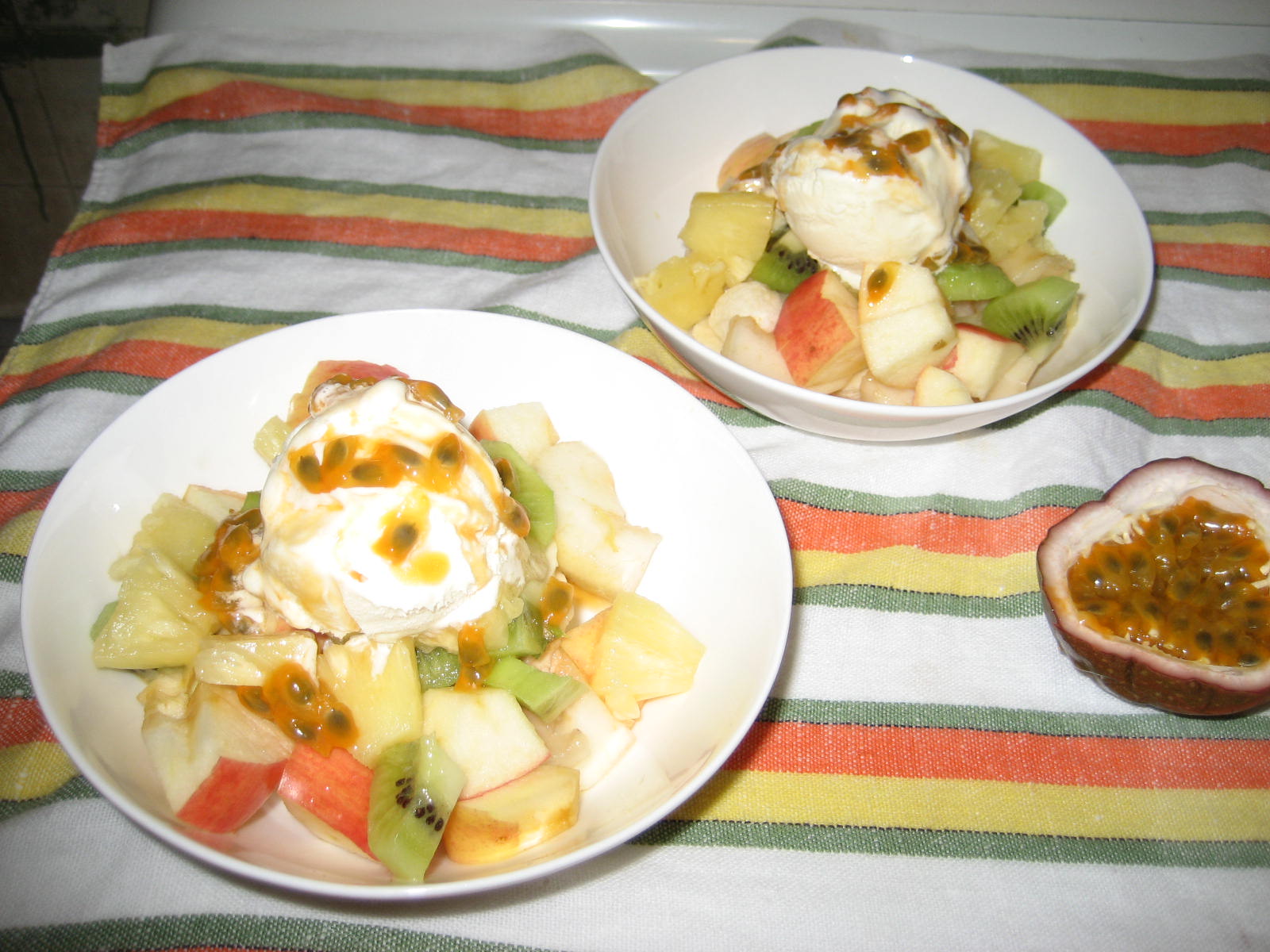 Fruit salad and ice cream makes at least one appearance at Phryne's St Kilda home, in Queen of the Flowers. Phryne has a refrigerator, but most homes wouldn't have - not in 1928 anyway. This recipe from Vesta's Women to Women pages in the Argus (28 March 1928) mentions neither ice cream nor whipped cream. Most of the fruits are winter fruits.
"The most satisfactory fruit salad is made with pineapple, bananas and pears as a basis. For six people a moderately large pineapple would be needed, with four good-sized bananas and four pears.
Before using, stir the contents of the bowl up in order to mix well. Other fruits may be added when they are in season. Strawberries make a delicious addition, so does passion-fruit. Peaches also blend well with the salad, and when there are no other fruits in season a little preserved ginger may be used with the foundation fruits. Apples are rather too film to be suitable for use in the salad. Rockmelons and raspberries are too strongly flavoured."
My winter fruit salad also had a basis of pineapple, bananas and pears. Pineapple isn't in season so I used tinned slices, an apple, kiwifruit and passionfruit. I think Vesta is right about the apple - it was a bit too crisp. Strawberries would have been better. I skipped the sugar, lemon juice and water. Preserved ginger sounds like an interesting twist.
Sunday, June 9, 2013
Lamb and Pearl Barley Soup
Barley soup appears in a couple of Kerry Greenwood novels, but none featuring Phryne. It's the sort of hearty winter meal that would appeal more to workers like Cec or Bert than a lady.
This recipe is adapted from one published in the Argus on 18 February 1931 as a "meatless" Lenten Dish. I've added a raw lamb bone for flavour (a shoulder, from which I cut most of the meat for a navarin of lamb later) but the soup is probably still good without it. Cutting the vegetables into fairly small pieces makes it more visually appealing.
I ended up omitting the milk, egg yolk and nutmeg even though they would make the soup smoother and richer.
Lamb and Pearl Barley Soup
60g or 1/2 cup pearl barley
1 lamb bone (shoulder or leg)
2 tablespoons butter
3 small carrots, thinly sliced
2 onions, diced
1 turnip, peeled and cut into small dice
1 stalk celery, sliced
6 peppercorns
2 cloves
thyme
parsley
1 blade mace (or nutmeg)
salt, pepper
250 ml milk
1 egg yolk
nutmeg
Put the pearl barley in a bowl, cover with water and soak overnight.
Saute 1 carrot and 1 onion in 1 tablespoon butter for a few minutes, without browning. Add the lamb bone, brown on all sides, the seasonings and 4 or 5 cups of water. Bring to the boil, skim, reduce heat and simmer for 1 to 1 1/2 hours or until the meat is falling from the bone.
Strain the stock, reserve the meat, discard the vegetables and seasonings. (Putting the stock in the freezer for 20 0r 30 minutes will make it easier to remove the fat.)
Saute the remaining onion, carrots, celery and turnip in 1 tablespoon butter for a few minutes until soft. Add the pearl barley, the lamb (cut into small pieces) and lamb stock; simmer for 20-30 minutes.
The soup can be thickened, if desired. Remove from heat. Stir in 250 ml milk, mixed with the beaten yolk of one egg, return to heat and add a dash of nutmeg.
Season to taste and serve with fried bread cut into slices.
This recipe is adapted from one published in the Argus on 18 February 1931 as a "meatless" Lenten Dish. I've added a raw lamb bone for flavour (a shoulder, from which I cut most of the meat for a navarin of lamb later) but the soup is probably still good without it. Cutting the vegetables into fairly small pieces makes it more visually appealing.
I ended up omitting the milk, egg yolk and nutmeg even though they would make the soup smoother and richer.
Lamb and Pearl Barley Soup
60g or 1/2 cup pearl barley
1 lamb bone (shoulder or leg)
2 tablespoons butter
3 small carrots, thinly sliced
2 onions, diced
1 turnip, peeled and cut into small dice
1 stalk celery, sliced
6 peppercorns
2 cloves
thyme
parsley
1 blade mace (or nutmeg)
salt, pepper
250 ml milk
1 egg yolk
nutmeg
Put the pearl barley in a bowl, cover with water and soak overnight.
Saute 1 carrot and 1 onion in 1 tablespoon butter for a few minutes, without browning. Add the lamb bone, brown on all sides, the seasonings and 4 or 5 cups of water. Bring to the boil, skim, reduce heat and simmer for 1 to 1 1/2 hours or until the meat is falling from the bone.
Strain the stock, reserve the meat, discard the vegetables and seasonings. (Putting the stock in the freezer for 20 0r 30 minutes will make it easier to remove the fat.)
Saute the remaining onion, carrots, celery and turnip in 1 tablespoon butter for a few minutes until soft. Add the pearl barley, the lamb (cut into small pieces) and lamb stock; simmer for 20-30 minutes.
The soup can be thickened, if desired. Remove from heat. Stir in 250 ml milk, mixed with the beaten yolk of one egg, return to heat and add a dash of nutmeg.
Season to taste and serve with fried bread cut into slices.
Wednesday, May 1, 2013
Carrot and Ginger Soup with Scallops
This isn't really a Phryne recipe, unless she happened to be in Provence some years after the time her novels are set and decided she'd like her cook to recreate this dish back in St Kilda. I used scallops that weren't in the shell, organic carrots and home-made vegetable stock.
Carrot and ginger soup with scallops
Serves 8
Serves 8
32 scallops, roe off
8 carrots, washed, peeled and cut into chunks
6 cm of fresh ginger root, peeled and grated
4 tbsp olive oil
3 cups chicken or vegetable stock
200 ml dry white wine
zest of 1 orange
300 ml cream
4 tbsp olive oil
3 cups chicken or vegetable stock
200 ml dry white wine
zest of 1 orange
300 ml cream
40 g butter
1 bunch flat-leaf parsley
Saute carrots and ginger in oil for 1 minute; add stock and white wine; cook 15-20 minutes over medium heat or until carrots are cooked but still slightly firm.
1 bunch flat-leaf parsley
Saute carrots and ginger in oil for 1 minute; add stock and white wine; cook 15-20 minutes over medium heat or until carrots are cooked but still slightly firm.
Remove
from heat; puree; add orange zest.
Brown
the scallops in butter for 1 min each side; remove scallops and set aside; reserve
pan juices.
Add
pan juices to carrot and ginger puree; add cream; bring to the boil, reduce
heat and simmer for about 1 minute.
Place puree in soup bowls, place scallops on top, garnish with parsley.
Place puree in soup bowls, place scallops on top, garnish with parsley.
Wednesday, April 24, 2013
Anzac Biscuits
Phryne Fisher drove ambulances in France during World War I. Bert and Cec are returned soldiers. Were they sent Anzac biscuits from home, biscuits made without eggs so they would keep?
There are no references to Anzac biscuits in any of the Phryne Fisher novels, but by the early 1920s readers were writing to Vesta, editor of the women's pages at the Argus, asking for recipes. The earliest recipe I could find actually called for two eggs and two teaspoons of cinnamon powder, but it did not appear until 1 May 1921 when it received an honorable mention in the Perth Sunday Times competition.
This recipe seems more authentic. It was published in July 1921, and again in June 1926, 1930, 1933... It makes about 2 dozen biscuits and contains no eggs. Don't be tempted to make bigger biscuits. The teaspoon of mixture makes a good Australian-sized biscuit.
Anzac Biscuits
2 breakfast cups rolled oats
1/2 cup sugar
1 scant cup plain flour
1/2 cup melted butter
1 tablespoon golden syrup
2 tablespoons boiling water
1 teaspoon bicarb of soda
Mix the golden syrup, boiling water and soda till they froth; then add the melted butter. Mix in the dry ingredients, and drop in teaspoonfuls on a floured tray. Bake in a slow oven, about 160 to 180 degrees, until golden. Enjoy with a mate and a cup of tea.
There are no references to Anzac biscuits in any of the Phryne Fisher novels, but by the early 1920s readers were writing to Vesta, editor of the women's pages at the Argus, asking for recipes. The earliest recipe I could find actually called for two eggs and two teaspoons of cinnamon powder, but it did not appear until 1 May 1921 when it received an honorable mention in the Perth Sunday Times competition.
This recipe seems more authentic. It was published in July 1921, and again in June 1926, 1930, 1933... It makes about 2 dozen biscuits and contains no eggs. Don't be tempted to make bigger biscuits. The teaspoon of mixture makes a good Australian-sized biscuit.
Anzac Biscuits
2 breakfast cups rolled oats
1/2 cup sugar
1 scant cup plain flour
1/2 cup melted butter
1 tablespoon golden syrup
2 tablespoons boiling water
1 teaspoon bicarb of soda
Mix the golden syrup, boiling water and soda till they froth; then add the melted butter. Mix in the dry ingredients, and drop in teaspoonfuls on a floured tray. Bake in a slow oven, about 160 to 180 degrees, until golden. Enjoy with a mate and a cup of tea.
Saturday, November 17, 2012
Whisky Mince Pies
Vesta's original recipe published in the Argus on 23 December 1937 calls for 1 gill of caramel, but since I don't know what form of caramel is meant and a later recipe is identical except that it uses brandy, I'm going with the hard stuff.
Whisky Mince Pies
375g raisins
250g sultana
125g currants
250g candied peel (orange and lemon)
2 large cooking apples, peeled, cored and cut into small cubes
250g suet, finely chopped, or 250g butter, melted
375g brown sugar
grated rind of one lemon and one orange and the juice of both
15g mixed spice
1/2 teaspoon cinnamon
4 tablespoons whisky or brandy
Finely chop or put through a fine mincer the raisins, sultanas, currants, apples and peel. Add the sugar, spices, rind and juice of the orange and lemon, the suet or melted butter and the whisky. Mix thoroughly, pack into a jar, cover and leave until required.
For the cases, make a good shortcrust pastry using 150g butter to 240g plain flour and mixing with water to a fairly stiff paste. Do not forget a pinch of salt, and, if liked, a tablespoon of sugar may be added. Rub the butter into the flour until the mixture looks like rough breadcrumbs. Then add the water.
Make the pastry early in the morning so that it will not become soft. Roll out to 1/2 cm thickness.
The pies may be made in rather big patty-pans, the pans being lined with pastry, and the tops put on and pinched. Butter the patty-pans before lining them, to ensure that the pies will slip out easily when cooked. Brush the tops with milk and sprinkle with very little sugar.
Christmas Pudding
This rich Christmas pudding is remarkably similar to the one published in Vesta's Woman to Woman column in the Argus on 9 January 1929. My mother handed it down to me and I fondly imagined her mother had passed it down from her Scottish foremothers. Maybe she just read the Argus.
Best made 7 to 14 days before required, my mother's recipe uses butter instead of suet and is flavoured with rum, sherry or whisky instead of the juice and rind of one lemon.
The recipe makes one large or three small puddings. I use a large aluminium steam pudding basin with clips but it can be boiled in a floured cloth.
Christmas Pudding
250g butter
250g brown sugar
5 eggs
250g sultanas
250g raisins
125g currants
60g dried figs
60g dates
60g maraschino cherries
60g blanched almonds, chopped
3 tablespoons rum, sherry or whisky
180g plain flour
180g soft breadcrumbs
1 teaspoon mixed spice
1 teaspoon ground cinnamon
1/2 teaspoon bi-carbonate of soda
Macerate fruits (sultanas, raisins, currants, figs, dates, cherries) in rum, sherry or whisky; cover with clingwrap and refrigerate overnight; stir in chopped almonds.
In a large mixing bowl, beat butter until soft; add sugar and beat to a cream; add eggs one at a time and beat evenly through.
Add prepared fruits alternately with sifted flour, breadcrumbs, spices and soda.
Place the mixture in a greased basin, leaving about 5 cms at the top. Cover with two thicknesses of greased paper or tinfoil, tie securely and steam in a saucepan of water with the lid on. The water needs to be 1/3 to 1/2 way up the basin and should be checked and topped up when necessary. Boil for 4 hours and again for 2 hours on the day of reheating. Serves 10-12.
Best made 7 to 14 days before required, my mother's recipe uses butter instead of suet and is flavoured with rum, sherry or whisky instead of the juice and rind of one lemon.
The recipe makes one large or three small puddings. I use a large aluminium steam pudding basin with clips but it can be boiled in a floured cloth.
Christmas Pudding
250g butter
250g brown sugar
5 eggs
250g sultanas
250g raisins
125g currants
60g dried figs
60g dates
60g maraschino cherries
60g blanched almonds, chopped
3 tablespoons rum, sherry or whisky
180g plain flour
180g soft breadcrumbs
1 teaspoon mixed spice
1 teaspoon ground cinnamon
1/2 teaspoon bi-carbonate of soda
Macerate fruits (sultanas, raisins, currants, figs, dates, cherries) in rum, sherry or whisky; cover with clingwrap and refrigerate overnight; stir in chopped almonds.
In a large mixing bowl, beat butter until soft; add sugar and beat to a cream; add eggs one at a time and beat evenly through.
Add prepared fruits alternately with sifted flour, breadcrumbs, spices and soda.
Place the mixture in a greased basin, leaving about 5 cms at the top. Cover with two thicknesses of greased paper or tinfoil, tie securely and steam in a saucepan of water with the lid on. The water needs to be 1/3 to 1/2 way up the basin and should be checked and topped up when necessary. Boil for 4 hours and again for 2 hours on the day of reheating. Serves 10-12.
Subscribe to:
Posts (Atom)